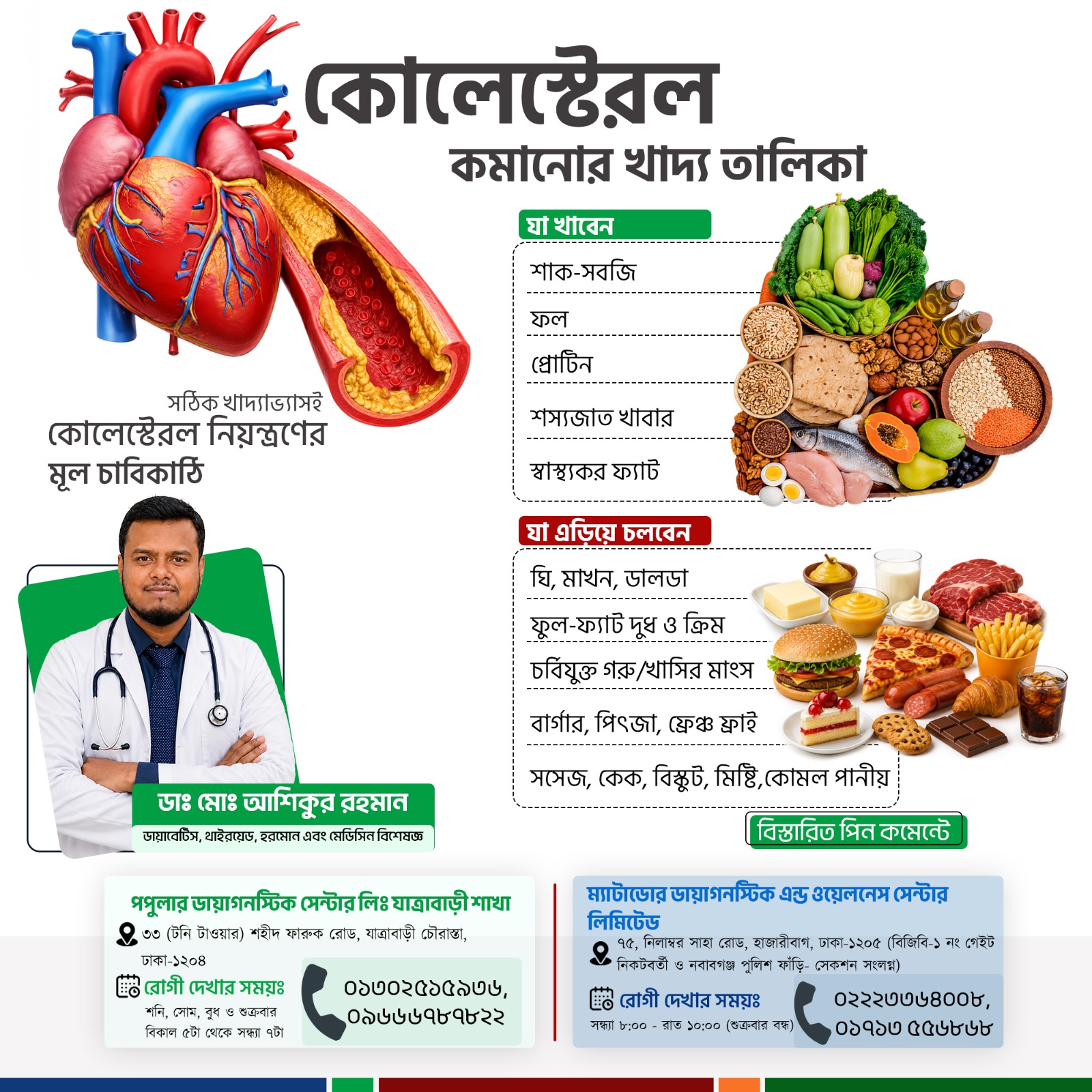
Overview
Familial High Cholesterol deserves an individual clinical assessment rather than a one-size-fits-all plan. The consultation usually considers cardiovascular risk as a whole, including lipids, blood pressure, diabetes, tobacco exposure, family history and lifestyle. A useful plan explains what the condition means, which findings matter now, what can safely wait, and how progress will be measured. This guide is designed for adults and families in Bangladesh, where meal patterns, fasting, work schedules, access to tests and medicine cost can all affect care.
Why this topic matters
Many people delay care because early changes can be mild, intermittent or mistaken for ordinary stress. With Familial High Cholesterol, the practical goal is not simply to label a condition. It is to identify reversible contributors, estimate future risk and prevent avoidable complications. Earlier assessment is particularly important during pregnancy, before surgery, in older adults, in children, or when kidney, liver or heart disease is already present.
Symptoms and patterns to notice
Keep a short record of when symptoms started, how often they occur, what makes them better or worse, and whether sleep, appetite, weight, menstrual pattern, thirst, urination, bowel habit, mood, strength or exercise tolerance changed at the same time. Symptoms alone cannot confirm Familial High Cholesterol, but a clear timeline helps the physician choose appropriate tests. Bring photographs of medicine packets and copies of previous prescriptions and laboratory reports.
Risk factors and associated conditions
Risk is shaped by age, family history, body composition, pregnancy history, current medicines, smoking or smokeless tobacco, sleep, physical activity and coexisting illness. A family history does not guarantee disease, and a person without obvious risk factors may still require evaluation. Steroids, supplements, herbal preparations and some psychiatric or reproductive medicines can alter symptoms or test results, so disclose everything being taken.
How doctors evaluate it
Assessment begins with history and examination. Testing should answer a clinical question; broad panels without context may create confusing incidental results. Depending on the presentation, the physician may review blood counts, glucose, kidney and liver function, electrolytes, lipid profile, hormone tests, urine studies, imaging or other focused investigations. Results are interpreted together with symptoms, timing, fasting status, pregnancy and current treatment—not in isolation.
Treatment principles
Treatment for Familial High Cholesterol depends on the confirmed cause, severity, complications and the patient’s priorities. It may include education, monitoring, nutrition and activity changes, treatment of an associated condition, or prescription medicine. Some people need urgent treatment; others benefit from observation with a defined follow-up date. Do not start, stop or change a prescription because of a single online article or an isolated laboratory value.
Food and daily routine in Bangladesh
A sustainable plate usually gives generous space to non-starchy vegetables, includes an appropriate portion of fish, egg, lentils, chicken or another protein, and keeps rice, roti or other starch to a portion that matches activity and medical goals. Prefer water to sweet drinks, and limit frequent fried snacks, bakery foods and oversized restaurant portions. Cultural foods can remain part of the plan; frequency, portion and cooking method often matter more than banning an entire cuisine.
Movement, sleep and stress
Regular movement improves general metabolic and cardiovascular health even when body weight changes slowly. Begin at a safe level: short walks, light resistance work and breaking up prolonged sitting are practical starting points. Increase gradually if there is no chest pain, severe breathlessness, dizziness or significant joint problem. Consistent sleep timing and treatment of loud snoring or possible sleep apnoea may also improve energy, appetite regulation and treatment adherence.
Medicines and monitoring
Use an updated medicine list containing dose, timing and purpose. Ask what to do after a missed dose, during vomiting or fever, while fasting, and before a procedure. Monitoring should have a reason and a review date. More frequent testing is not automatically better, but long gaps can miss deterioration. Report side effects promptly; many can be managed by adjusting timing, dose or the treatment choice instead of abandoning care.
Special situations
Pregnancy, breastfeeding, Ramadan fasting, acute illness, travel and surgery can change the safety of a usual plan. Discuss these situations in advance whenever possible. Children, frail older adults and people with kidney or liver impairment may require different targets or doses. A personal emergency plan should identify whom to call, what information to carry, and when home management is no longer appropriate.
When urgent care is needed
Seek urgent medical help for chest pain, severe breathing difficulty, fainting, a new seizure, sudden weakness on one side, confusion, persistent vomiting, severe dehydration, rapidly worsening swelling, heavy bleeding, or a marked change in consciousness. For any rapidly worsening symptom, do not wait for an online reply. Call local emergency services or go to the nearest capable hospital.
Preparing for your appointment
Write down your three most important questions. Bring recent reports, prescriptions, a list of allergies and relevant home readings. Note pregnancy plans and the dates of important symptoms. Ask the clinician to explain the working diagnosis, which test will change management, the expected benefit and common risks of treatment, and the exact follow-up plan. Shared decisions are safer when the patient understands both the action and the reason behind it.
Key takeaways
The safest approach to Familial High Cholesterol combines a clear diagnosis, realistic daily actions, appropriate treatment and planned follow-up. Avoid miracle cures and extreme restrictions. Choose changes that can continue during busy weeks and family events. This article supports informed discussion with a qualified clinician; it does not diagnose an individual or replace an examination.
বিষয়টি কেন গুরুত্বপূর্ণ Familial High Cholesterol বিষয়ে সঠিক সিদ্ধান্তের জন্য শুধু একটি উপসর্গ বা পরীক্ষার রিপোর্ট যথেষ্ট নয়। রোগীর বয়স, পারিবারিক ইতিহাস, চলমান ওষুধ, গর্ভাবস্থা, খাদ্যাভ্যাস, ঘুম এবং অন্যান্য রোগ একসঙ্গে বিবেচনা করতে হয়। এই নির্দেশিকার উদ্দেশ্য হলো রোগী ও পরিবারকে মূল্যায়ন, চিকিৎসা এবং ফলোআপের ধাপগুলো পরিষ্কারভাবে বুঝতে সাহায্য করা।
যেসব পরিবর্তন খেয়াল করবেন উপসর্গ কখন শুরু হয়েছে, কতক্ষণ থাকে, কী কারণে বাড়ে বা কমে এবং এর সঙ্গে ওজন, ক্ষুধা, তৃষ্ণা, প্রস্রাব, ঘুম, মাসিক, মেজাজ বা কর্মক্ষমতার পরিবর্তন হয়েছে কি না লিখে রাখুন। উপসর্গের একটি সংক্ষিপ্ত সময়রেখা চিকিৎসককে প্রয়োজনীয় পরীক্ষা বেছে নিতে সাহায্য করে। আগের রিপোর্ট ও ব্যবহৃত সব ওষুধের তালিকা সঙ্গে আনুন।
ঝুঁকির কারণ বয়স, বংশগত ইতিহাস, শরীরের ওজন ও কোমরের মাপ, গর্ভাবস্থার ইতিহাস, ধূমপান, শারীরিক নিষ্ক্রিয়তা এবং কিডনি, লিভার বা হৃদ্রোগ ঝুঁকিকে প্রভাবিত করতে পারে। স্টেরয়েড, হারবাল পণ্য ও কিছু মানসিক বা প্রজননস্বাস্থ্যের ওষুধও উপসর্গ বা পরীক্ষার ফল বদলে দিতে পারে। তাই চিকিৎসকের কাছে কোনো তথ্য গোপন করবেন না।
চিকিৎসক কীভাবে মূল্যায়ন করেন প্রথমে বিস্তারিত ইতিহাস ও শারীরিক পরীক্ষা করা হয়। এরপর প্রয়োজন অনুযায়ী রক্তের শর্করা, কিডনি ও লিভার ফাংশন, লিপিড প্রোফাইল, হরমোন পরীক্ষা, প্রস্রাব পরীক্ষা বা ইমেজিং লাগতে পারে। সব পরীক্ষা সবার জন্য প্রয়োজন নয়। রিপোর্টকে উপসর্গ, পরীক্ষার সময়, খালি পেট থাকা, গর্ভাবস্থা এবং চলমান চিকিৎসার সঙ্গে মিলিয়ে ব্যাখ্যা করতে হয়।
চিকিৎসার মূলনীতি চিকিৎসা নির্ভর করে নিশ্চিত কারণ, রোগের তীব্রতা, জটিলতা ও রোগীর লক্ষ্য অনুযায়ী। খাদ্য ও দৈনন্দিন রুটিনের পরিবর্তন, পর্যবেক্ষণ, সংশ্লিষ্ট রোগের চিকিৎসা এবং প্রয়োজন হলে প্রেসক্রিপশন ওষুধ একসঙ্গে লাগতে পারে। একটি অনলাইন লেখা বা একবারের রিপোর্ট দেখে নিজে থেকে ওষুধ শুরু, বন্ধ বা ডোজ পরিবর্তন করবেন না।
বাংলাদেশি খাবারের বাস্তব পরিকল্পনা প্লেটের বড় অংশে শাকসবজি রাখুন, সঙ্গে পরিমিত মাছ, ডিম, ডাল বা মুরগির মতো প্রোটিন নিন এবং ভাত বা রুটির পরিমাণ ব্যক্তিগত প্রয়োজন অনুযায়ী ঠিক করুন। মিষ্টি পানীয়, ঘন ঘন ভাজাপোড়া, বেকারি খাবার এবং অতিরিক্ত বড় রেস্টুরেন্ট পরিবেশন সীমিত রাখুন। পরিচিত দেশি খাবার বাদ না দিয়েও পরিমাণ, রান্নার পদ্ধতি ও খাওয়ার সময় ঠিক করে ভালো ফল পাওয়া যায়।
ব্যায়াম, ঘুম ও মানসিক চাপ নিয়মিত হাঁটা, হালকা শক্তিবর্ধক ব্যায়াম এবং দীর্ঘক্ষণ বসে থাকার মাঝে বিরতি নেওয়া উপকারী। ধীরে শুরু করে সহনশীলতা অনুযায়ী সময় বাড়ান। বুকব্যথা, তীব্র শ্বাসকষ্ট, মাথা ঘোরা বা গুরুতর জয়েন্ট সমস্যা থাকলে আগে চিকিৎসকের পরামর্শ নিন। নিয়মিত ঘুমের সময় বজায় রাখুন এবং জোরে নাক ডাকা বা ঘুমে শ্বাস বন্ধ হওয়ার লক্ষণ থাকলে মূল্যায়ন করান।
ওষুধ ও পর্যবেক্ষণ প্রতিটি ওষুধের নাম, ডোজ, সময় ও উদ্দেশ্য লিখে রাখুন। ডোজ মিস হলে, জ্বর বা বমি হলে, রোজা রাখলে অথবা অপারেশনের আগে কী করতে হবে চিকিৎসকের কাছ থেকে জেনে নিন। পরীক্ষার একটি নির্দিষ্ট উদ্দেশ্য ও পরবর্তী পর্যালোচনার তারিখ থাকা উচিত। পার্শ্বপ্রতিক্রিয়া হলে চিকিৎসা ছেড়ে না দিয়ে দ্রুত জানান।
বিশেষ পরিস্থিতি গর্ভাবস্থা, বুকের দুধ খাওয়ানো, রমজানে রোজা, ভ্রমণ, তীব্র অসুস্থতা ও অপারেশনের সময় সাধারণ চিকিৎসা পরিকল্পনা বদলাতে হতে পারে। শিশু, বয়স্ক এবং কিডনি বা লিভারের সমস্যায় আক্রান্ত ব্যক্তির লক্ষ্য ও ডোজ আলাদা হতে পারে। আগে থেকেই জরুরি যোগাযোগ ও করণীয় লিখে রাখা নিরাপদ।
কখন জরুরি চিকিৎসা নেবেন বুকব্যথা, তীব্র শ্বাসকষ্ট, অজ্ঞান হওয়া, খিঁচুনি, হঠাৎ শরীরের এক পাশ দুর্বল হওয়া, বিভ্রান্তি, বারবার বমি, তীব্র পানিশূন্যতা, দ্রুত বাড়তে থাকা ফোলা বা চেতনার পরিবর্তন হলে জরুরি বিভাগে যান। দ্রুত অবনতি হলে অনলাইনে উত্তরের জন্য অপেক্ষা করবেন না।
অ্যাপয়েন্টমেন্টের প্রস্তুতি আপনার সবচেয়ে গুরুত্বপূর্ণ তিনটি প্রশ্ন লিখে আনুন। সাম্প্রতিক রিপোর্ট, প্রেসক্রিপশন, অ্যালার্জির তালিকা এবং ঘরে মাপা রিডিং সঙ্গে রাখুন। চিকিৎসকের কাছে সম্ভাব্য রোগনির্ণয়, কোন পরীক্ষায় চিকিৎসা সিদ্ধান্ত বদলাবে, চিকিৎসার উপকার ও ঝুঁকি এবং পরবর্তী ফলোআপের নির্দিষ্ট সময় জেনে নিন।
মূল কথা নিরাপদ ও কার্যকর যত্নের জন্য সঠিক রোগনির্ণয়, বাস্তবসম্মত দৈনন্দিন পরিবর্তন, প্রয়োজনীয় চিকিৎসা এবং পরিকল্পিত ফলোআপ একসঙ্গে দরকার। চটকদার নিরাময়ের দাবি ও অত্যন্ত কঠোর ডায়েট এড়িয়ে চলুন। এই লেখা সাধারণ স্বাস্থ্যশিক্ষার জন্য; ব্যক্তিগত রোগনির্ণয় বা চিকিৎসকের সরাসরি পরামর্শের বিকল্প নয়।
Clinical referenceক্লিনিক্যাল তথ্যসূত্র
View the authoritative source used for this patient guideএই নির্দেশিকার প্রামাণ্য তথ্যসূত্র দেখুন